Saturday, January 16, 2010

Why Do People Like Naruhina

SLP: INAH

SOURCE: INAH
http://dti.inah.gob.mx/index.php?option=com_content&task=view&id=4053&Itemid=329


Monday
, December 21, 2009
With the participation of residents, INAH reconstruction works in the property affected by a lightning strike. Photos
The National Institute of Anthropology and History (INAH) conducts the second phase of rebuilding the church of Our Lady of the Assumption in Santa Maria Acapulco, in the municipality of Santa Catarina, San Luis Potosi.

In 2007 the church suffered a fire caused by lightning strikes, where the fire consumed the roof constructed of palm, interior artesón and several wooden altar, pulpit and part of the cultural property, such as furniture, so the first major work was focused on the roof made of palm logs.

also strengthened the crown of parapets and parapet wall to receive the new roof. This work was performed under the direction of the architect Begoña Garay together with the participation of people in the community who were trained.

The second stage consists of the consolidation and restoration of cultural property and personal property by the Restorative Renata Schneider, including the mural, which was saved from the fire, and property rescued by people in the population , wood carvings are six eighteenth century, three of which are large format and correspond to a Christ of Nazareth, a Virgen de la Soledad, and a sorrowful, as well as documentary records, which highlights a missal dating from 1736, and belongs to the people pame (Xió'i), plus the project includes the reproduction and reintegration of the four retablos and pulpit.

consolidation currently taking place in the wall of the church and the reconstruction of the altarpiece, a task that is supported directly by the inhabitants, and which expects to complete this phase by mid December.

the third phase, which is projected to run for next year, plans to rebuild the choir and the panels, the same way with the support of locals.

Difference Between Magnums And Regulars

church restored altarpiece in SLP

SOURCE: INAH
http://dti.inah.gob.mx/index.php?option=com_content&task=view&id=4078&Itemid=329


The painting was restored after suffering damage from a lightning strike.


The National Institute of Anthropology and History (INAH) delivered to the community pame (Xi'oi), the first altar at the Church of the Assumption in Santa Maria Acapulco, in the municipality of Santa Catarina, San Luis Potosí, after his restoration to the damage caused by fire after a lightning strike in 2007.

The altarpiece consists of two paintings: the main one is dedicated to the Virgin Guadalupe and show appearances of the Virgin to Juan Diego.

The second painting is at the top, is a representation of St. Francis of Assisi kneeling before Jesus' appearance.

These two paintings are among the pillars stem, which were originally covered with silver, and their characteristics correspond to the mid eighteenth century.

About
are decorative paintings that were saved from the fire also recovered the original colors.

On the altar are also the Holy Burial The Tabernacle and a small image of the Virgin.

The restoration of the paintings were by Renata Schneider Glantz, National Coordination of Cultural Heritage Conservation, and Garay Begoña architect of San Luis Potosi INAH Center.

The ceremony was attended by the paintings restored Michelangelo Rivapalacio Sulser, director of San Luis Potosi INAH Center, and Amalia De Leon, director of the Preservation and Restoration Works of INAH, who thanked the community support and collaboration in the works.

After delivery there was a mass, the first after fire damaged the church in 2007, by the Archbishop of Ciudad Valles, Archbishop Roberto Balmori. The work of restoring the property and architectural reconstruction by INAH experts continue in the area. The project includes completion by 2012.

Thursday, January 14, 2010

Wedding Favours Tree House

delivery reopened for worship in the temple of Santa María Acapulco pame

colonial monument is considered the architectural jewel of a Franciscan missionary route (Photo: Agency / bbc)


THE UNIVERSAL SAN LUIS POTOSI
WEDNESDAY 13 JANUARY 2010
http://www.eluniversal.com.mx/notas/651630.html

After two and half years of intensive restoration work with an investment of around 20 million pesos, was recently reopened for worship in the temple Pame de Santa Maria Acapulco, San Luis Potosi, and eighteenth century.
The place was burned by lightning that hit its distinctive thatched roof, on July 1, 2007.

colonial monument is considered the architectural jewel of a path founded Franciscan mission in the region of the Sierra Gorda of San Luis Potosi, and is In addition, the civic and religious center of culture pame, in Santa Maria Acapulco brings together the community that retains traditions, and participating actively in the work.


This action not only recaptures the historic building, but also intangible heritage consists of a multitude of ways, that still perform Pames around the temple.

Work to return the property value are headed by the National Institute of Anthropology and History (INAH), which has provided resources and expertise for your attention.

The work has been carried out jointly with the community of Santa Maria and traditional government and the municipality of Santa Catarina, the state government and the National Commission for the Development of Indigenous Peoples.

The reopening of the temple was carried out with the first delivery of the finished works, among which the return of the altarpiece dedicated to the Virgin of Guadalupe, reproduced by Cuauhtemoc Soto, one of Mexico's most important altarpieces .

also gave out 10 polychrome sculptures of the eighteenth century, fully restored by INAH and the fire were rescued by villagers, among which are the sizes with those carried out by the offices of Holy Week.

Similarly some of the furniture was operated and documentary collection, which highlights a set of eight books, missals composed of the seventeenth century and eighteenth-century parish documents.

In regard to the architecture of religious buildings, consolidated the structural windows and doors were restored with mesquite wood, placed floors, altars were replaced and the gabled roof with Condition peculiar palm.

Los trabajos de recuperación del templo de Santa María Acapulco son coordinados por la restauradora Renata Schneider, de la Coordinación Nacional de Conservación del Patrimonio Cultural, y Begoña Garay, arquitecta del Centro INAH-San Luis Potosí.

Al respecto, Schneider explicó que a partir del incendio, el INAH ha llevado a cabo cinco temporadas de trabajo, durante las cuales se han atendido todos los aspectos antes mencionados, bajo tres líneas de acción: una orientada a atender las áreas del edificio que se podían recuperar luego de la acción del fuego.

Otra relativa a los bienes muebles que la comunidad escaped the fire, among the documents found graphics, sculptures, furniture, liturgical objects and religious garments.

And a third focused on making reproductions of objects that were completely lost.

noted that one of the elements that represented hard work was the mural that decorates the interior and the facade, which were carried out restoration work, which involved a long time, which was consolidated most part of the interior walls, there are still outstanding work the two pillars of the facade, which is expected to be completed this year.

The facade, he added, was also operated in the structural part, to address the collapse of your heads is in the process your decor with a 90 per cent. Also, a lightning rod was placed outside the building to prevent accidents.

The INAH restorer said the decision to reproduce the goods completely deteriorated was taken in a collegial manner, through consultation with a board of specialists who said the rules should continue to replenish each item lost.

stressed that both the compounds that have been restored as restored and reproduced, have worked with similar materials to the original, ie, traditional. In the case of the mural are used clay from the region and natural binders.

The sculptures were wooden worked with stew and painted, following the techniques involved in these processes.

For its part, the architect Garay explained that the attention of the roof and a half involved various tasks initiated in 2007, from cutting wood, which was conducted from October to December of that year, during which time which were felled about 600 trees tropical permission Secretariat of Environment and Natural Resources.

In 2008 the wood was ready, then proceeded to their placement, and July 1, 2009 work was completed, including palm jacket.

Schneider also noted that all work is done with the support of the community, which has been intensely involved for the recovery of his temple.

He said that an important aspect of the rescue of the temple was the preliminary work being undertaken by INAH in the temple, since months before the accident, which included the inventory and registration of all parts guarded, indicating chip features and photographs.

This documentation is kept with the mayor's office and served as an indicator to replace the deteriorated value of each object and to collect the insurance in question, which has allowed much of the work.

Schneider said that during 2010 will continue the work to complete the restoration of the mural and will involve all missing objects: paintings, furniture, sculptures, liturgical vestments and documents.

While the architecture will be replenished in the choir and the paneling, and in regard to reproductions of the property, will continue with the main altar of Sorrows.

Finally, said the restoration project is scheduled to finish in its entirety until 2012. In parallel, working on the design of a management plan that will allow further conservation of the temple, and the development of community workshops to provide information on caring for their heritage.


cvtp

LINK:

Wednesday, January 13, 2010

Black Lump On Dog's Tail

cimbalom (also called Cymbal Cymbal or Hungarian)


The cimbalom is a stringed instrument percussive, of which little is known about its origin, but that is inevitably associated with Gypsy music. It is a widely used instrument in music of some Balkan countries, and is often said that the Roma people led him to Eastern Europe around the twelfth century. Their use is particularly remarkable among the "Lautari" gypsy musicians from Romania and Hungary.


The cimbalom is trapezoidal, and their cords are arranged, for shorter and longer acute and severe, following the parallel sides. This instrument looks like a kind of zither or harp, and played percussing the ropes with two decks. In its right side are the 'tuning pins, a sort of pins, with which it can tighten or loosen the cued, while the left are the pins that hold the cued.


The cimbalom has a large number of strings. Usually acute strings are grouped into groups of four tuned to the same note, while the most serious are arranged in two or three notes or even if it is a larger cimbalom.


cimbalom There are two kinds: the laptop medium-high log that hangs from the shoulders and can be executed while walking, and the concert, the largest and longest track, created around 1874 by the Hungarian expert piano maker Josef schund. The latter is the size of a small piano, and has wooden legs and a foot hold it very characteristic that allows you to "mute" the strings, ie shorten the vibration when pressed. Thus, there is the typical sound of cimbalom, which in the case of portables can be achieved by interweaving pieces of clothing or any type of cloth between the strings.


The first textbook for this instrument was published by Geza Allaga, a member of the orchestra of the Royal Hungarian Opera in 1889. The instrument became popular in Austro-Hungarian Empire and was used by all ethnic groups in the country, including Jews klezmorim and musicians Slavs and Magyars (Hungarians), and Roma (Gypsies) and the aforementioned musicians Lautari. The use of this instrument was extended to the late nineteenth century and replaced the kobza in Romanian and Moldovan folk groups. In Wallachia is used almost as a percussion instrument, while in Transylvania and Banat, style of playing is more tonal, heavy with arpeggios.

Ion Miu - Only the cimbalom


Jeno Farkas - Hungarian Gypsy music with cimbalom


Hungarian Folklore


cimbalom and piano duo


Gypsy Music


cimbalom orchestra with


Flamenco with cimbalom


cimbaloms Duo

Wednesday, January 6, 2010

Sterno Burner All Clad

Report on restoration work in Temple of Our Lady of the Assumption

To see what was said at the news of Alejandro Cacho on December 28, 2009, click the link and look for 40:20 minutes.

Tuesday, January 5, 2010

Bb Gun Desert Eagle Metal


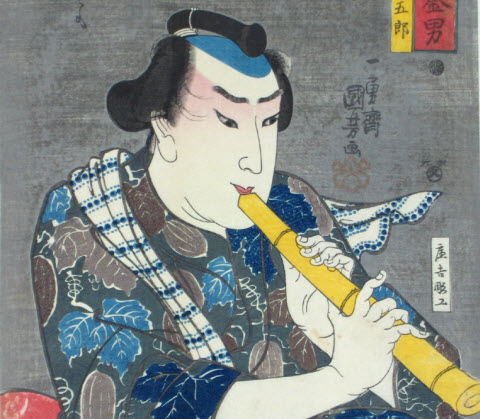
The shakuhachi is a wind instrument, more precisely, a bamboo flute from Japan. This flute is held vertically so as a recorder. His name is directly related to its standard size: shaku, means "foot" as the unit of measurement and hachi eight, meaning that the instrument has a length of 1 shaku point 8 (equivalent to 54.5 cms .) However, although the name of this instrument refers to a specific size, there shakuhachi flute various measures.


This instrument is played by blowing through one end, in a way that is blown simirlar the edge of the spout of a bottle. Because at its other end terminates in a sharp edge, allows the performer substantial control over the tone. The shakuhachi provides a range of two full octaves (the most severe is called Otsu and sharper Kan) and an incomplete third octave ( Tai-Kan.) The different octaves are achieved through subtle changes in breathing and in the mouth, which it closely resembles the nay Arabic. The five holes of the flute is tuned in pentatonic mode without semitones, but the player can customize each pitch as much as a tone or more using techniques known as meri and kari , achieved by changing the blowing angle , which can get tones higher or lower, respectively.


Japan has over six hundred varieties of bamboo and building a professional tool is used only one of these varieties. As can be seen in the photos, the bottom of the flute is a bit Masanche and sometimes curved, which is that used bamboo lower right where the roots begin to appear. The average diameter of the pipe is 4 to 5 cm. and has 4 holes in front and one in the front, which produce the following notes: re, fa, sol, la, C and D, although both techniques fingering complex as air pressure and change of position (angle) of the instrument chromatic scale can be achieved, what has become a very versatile instrument for contemporary music. La embocadura ha variado con el paso de los siglos pero en la actualidad se asemeja un poco a la de las quenas.


Historia


"La historia de la flauta Shakuhachi se remonta al periodo Nara (s. VIII) cuando fue introducida desde China y empleada en el conjunto de la música cortesana Gagaku. Este instrumento tenía 6 orificios, 5 al frente y uno en la parte anterior. Luego de una reforma a la música de la corte durante el período Heian, este tipo de flauta desapareció. Mucho más tarde, durante Muromachi (1338-1573), llega de China otra flauta vertical de menor tamaño llamada Xiao in Chinese and would give rise to Hitoyogiri measuring just a point 1 shaku (33.3 cm). This was originally used by monks beggars ( komos ) and later became popular as a means of entertainment but is said to his repertoire disappeared along with Komuso . This could occur due to your high-pitched sound, which is said, could not compete with the deep tones and expressive modern Shakuhachi .


Shakuhachi Flute used today is derived from the instrument appeared in the early period Edo (1603-1868) in the hands of itinerant monks ( Komuso -not to be confused with komos ) of the Fuke sect of Zen Buddhism These monks in their training had three main practices: meditation known as zazen The interpretation of the Shakuhachi flute and sometimes practice a martial art which was used in the heavy body of the flute as a weapon of defense because of the danger it posed to travel in parts of Japan at the time .
In interpreting these monks sought flute basically two things: the issue of harsh sounds, or "dirty" -Because they believed that through these could purify his spirit, and breath control.


During the Edo period appeared several styles of interpretation of the Shakuhachi Flute: Myoan (Meian) in Kyoto, and Kinko in Tokyo at the headquarters of the Komuso , and during the Meiji period (1868-1912), a new school called Tozan dedicated to teaching the flute to students of all backgrounds. Initially conceived as a solo instrument among the monks, by the eighteenth century began to be used in music entertainment, a kind of chamber music, beside the Koto harp and lute shamisen.
The repertoire of this instrument consists of honkyoku or original parts or parts Gaikyoku "borrowed" (lit. foreign melodies) and Shinkyoku or new compositions. "


Excerpt from: www.japonartesescenicas.org


Shakahuchi touched by Tadashi Tajima


David Sasloff improvising with Shakahuchi


Music Japanese traditional Shakahuchi, Koto and Shamisen


Keiko Matsui - Light Above the Trees


Dialogues between a Turkish and a clarinet Shakahuchi


piano duo and Shakahuchi


Jazz Shakuhachi


Sunday, January 3, 2010

Red Swollen Pinky Toe

Derbake Shakuhachi (Also do known as Darbuka, dumbek or Tablah)


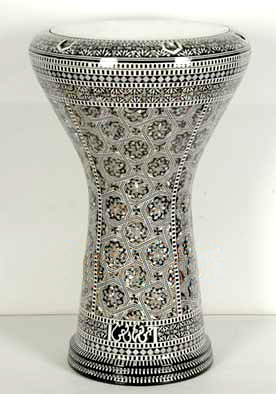
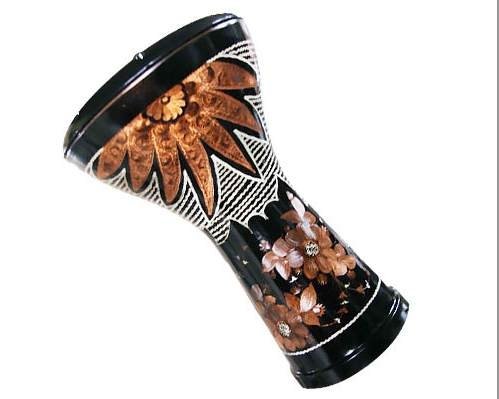
The derbake or darbuka (Arabic دربكة) is a percussion instrument of Arabic origin, widely used in the Middle East, Egypt and the Maghreb (North Africa). This is basically a cup-shaped drum with a single patch (which can be goat leather, fish skin, or cellulose) into the hole larger. Its name derives from the Arabic root "Darb", meaning "blow." Another of his names, dumbek , refers to the main sounds that form the basis of his technique: "dum", a bass sound that is getting bumped in the middle and "tak" a sharper sound. In addition to his two major hits, there are ornamental treble called harakat "(lit. movements), similar to the beating on drums. In Egypt, is often called tablah , a generic word to designate Arabic percussion instruments.


The soundboard of the instrument used originally constructed with clay. You can also find wooden derbake, although currently most are aluminum. Moreover, today are privileged to plastic patches of leather, since the latter are affected by moisture, causing you to lose your stress, and must be heated to re-tune them. For their obvious advantages, the professional musicians often use aluminum derbake, usually decorated with inlaid mother of pearl, and plastic patches. There are two distinct sizes, as well as typical, which makes this instrument, the Sombati , somewhat larger than the classic, and Dahola or Dohola , the largest and most serious of the three .


The derbake or darbuka, is a very popular in the Balkans and Turkey as among the Gypsies, as well as in the Arab World. Clutchless its history is quite uncertain. It is often said that dating back to ancient Babylon, but their use is much more visible from the nineteenth century. So you can see many itinerant gypsy musicians represntaciones of the Middle East and Egypt at this time.


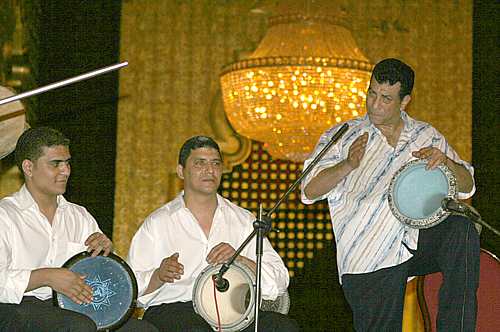
To run this tool, it is placed on one leg (although there are those who carry it by holding it between the two legs, like a djembe), and used the fingers and the palm of your hand to touch it. While his tonal range is very wide, in countries like Egypt, Syria, Lebanon and Turkey, has reached high levels of virtuosity noteworthy. The derbake is usually accompanied by other percussion instruments such as riqq the bendir the Mazhar, or dahola , among others, among which stands out by improvising and ornamenting rolls and games ( harakat ), while maintaining a pace as base.


While derbake is a very popular music used in Arabic, was not included in the classical Arab orchestra until 1960, as the main instrument in Arab classical music in charge of maintaining the pace and make the ornaments was riqq . The derbake has come to be an instrument as vital as characteristic of modern Arabic music, a fact that is reinforced by the great rhythm of the music imprint. It is also an essential tool in Oriental dance and is very common to see solo derbake in which a dancer plays with her body rhythms and games running an impromptu manner derbake.

Improvisation two derbake


Onur, only two derbake


and Hossam Serena Ramzy, just danced derbake


Misirli Ahmet two derbake


Another
Misirli Ahmet


Jimmy Page and Robert Plant, "Four Sticks" with Arabic percussion