
This drum, is originally from Brazil and is widely used in the Candomble and capoeira. Its name comes from the Arabic at-Tabac (lit. "plate") and is often called Pernambuco Ilú . The atabaque , also called "Brazilian conga" for its similarity to the conga of Afro-Cuban, is a percussion musical INSTRUMENT cylindrical or slightly conical .. The body is made of wood, usually jacaranda, and its shape is very similar to that of a barrel, but thinner. Pose a single patch, is usually made of goat skin, cow or other animal, thick and shaved. sound is achieved by tapping in the center, middle and edge of the patch with the fingertips with wrist and hand edge or even also with leather or with sticks . Arguably there are three types atabaque: Rum, which is the most serious; Rumpi , middle and Lê the sound is sharper.
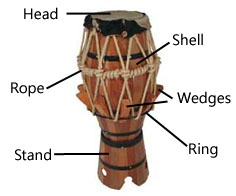
religious His imprint is evident, since it is considered one of the sacred instruments of Candomblé, as it serves, along with other instruments as a means of communication between men and Orishas. The atabaques reproduce encrypted messages, specifically for each god, so have a wide repertoire of accents and rhythmic patterns that vary according to each Orisha, dance or entity invoked. The musical texts refer to several African dialects original interlaced with words in Portuguese.

is also vital instrument in capoeira. The atabaque is the main percussion instrument of the "roda de Angola", as the pace and synchronize the three berimbau assembly. Actually, it was the first instrument used in capoeira. However, not always present, mainly because it usually either "dull" sound of the berimbau not allowing sometimes hear the dial or so impractical that is transported. Atabaque The pace is like a heartbeat and often made to keep the base without much variation.

The sounds of atabaque depend on Tap is used, these are some of them:
1) Maculelê
atabaque Touches of
Several atabaques
Atabaque in Candomblé
Atabaque in capoeira


0 comments:
Post a Comment