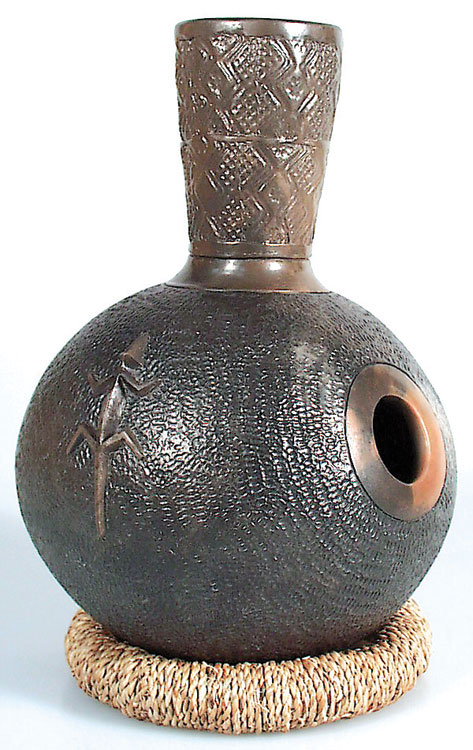
This instrument of African origin, comes from Nigeria, specifically the Igbo and Hausa peoples. In Igbo language, "udu" means both "peace" and "vessel." Its origin seems to be quite obvious, since it is thought that this was simply a vessel to carry water, which then added a hole on one side, they discovered their sound particularly deep and vibrant. We know that the udu, usually made of clay, was adopted by many African groups as a ceremonial instrument, as it seemed tenerel power to call the "voices of the ancestors" .

usually also says that in some tribes was played exclusively by women. This could be due, perhaps, that many Nigerian tribes, water is associated with the feminine, and not surprisingly, are precisely the women who take care of tasks related to that item, as loading the vessels from the river for supplies of water or wash clothes.

The udu is played with hands and produces a very peculiar sound serious, severe and profound, to be beaten on larger hole, while the sounds are more acute neck . Sounds by pushing air, in or out, by any of their mouths. also the whole body can be touched with the fingers. Today it is widely used by percussionists from different musical styles. Playing
several
udus
usually also says that in some tribes was played exclusively by women. This could be due, perhaps, that many Nigerian tribes, water is associated with the feminine, and not surprisingly, are precisely the women who take care of tasks related to that item, as loading the vessels from the river for supplies of water or wash clothes.
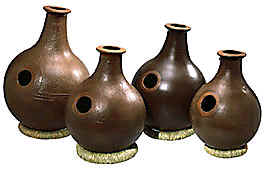
The udu is played with hands and produces a very peculiar sound serious, severe and profound, to be beaten on larger hole, while the sounds are more acute neck . Sounds by pushing air, in or out, by any of their mouths. also the whole body can be touched with the fingers. Today it is widely used by percussionists from different musical styles. Playing
several
udus
Making a udu


0 comments:
Post a Comment